Pelindo Records 1st Semester Export Import Container Flows Grow 13.64 Percent
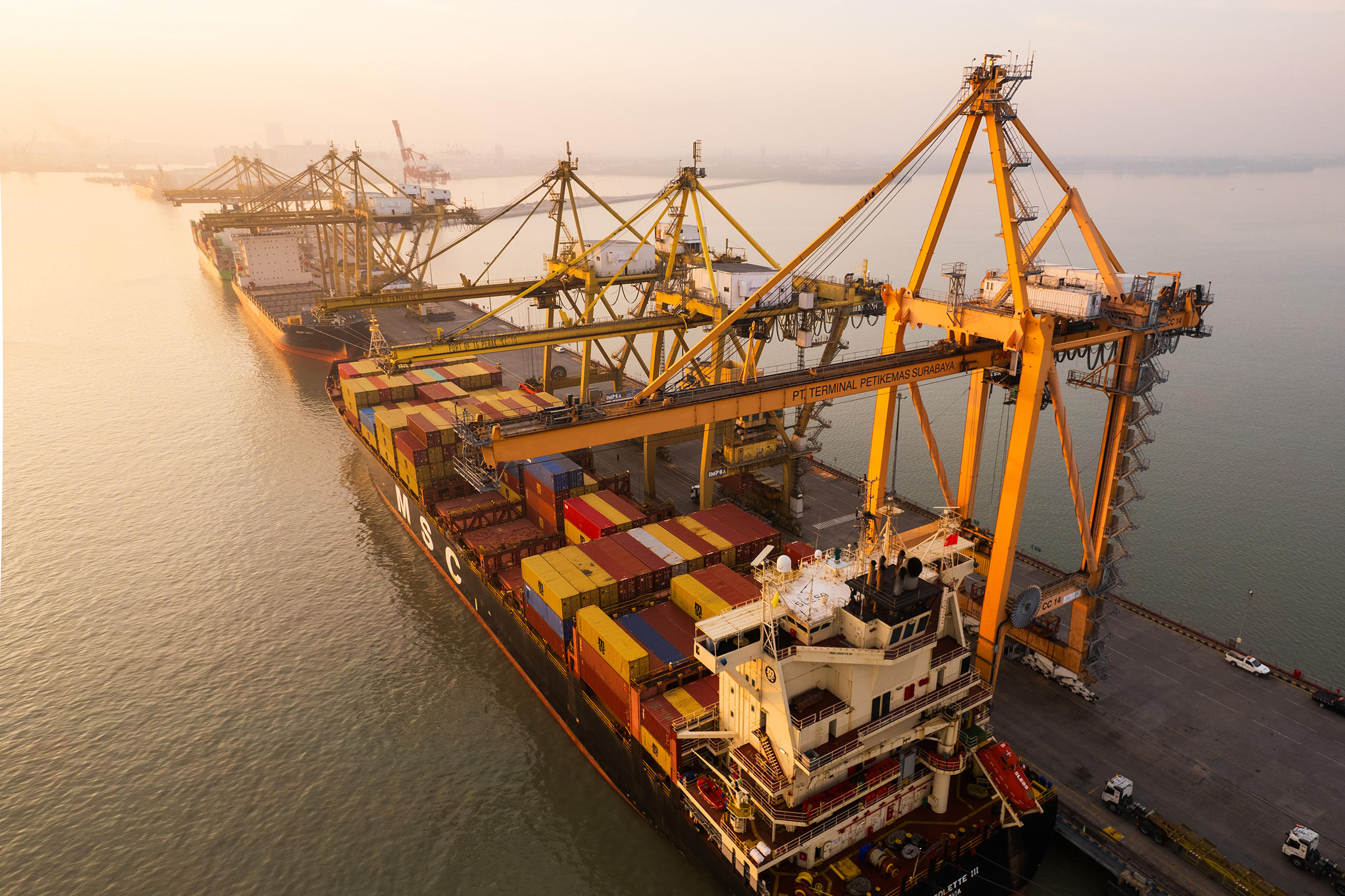
Surabaya (15/07) - The number of export and import (international) container flows through terminals under the management of PT Pelindo Terminal Petikemas in the first semester of 2025 increased by 13.64 percent. The company recorded 2.1 million TEUs of international containers in the first semester while in the same period in 2024 there were 1.8 million TEUs.
PT Pelindo Terminal Petikemas Corporate Secretary Widyaswendra said the number of export and import containers both experienced growth. During the first semester, the number of imported containers was 998 thousand TEUs and export containers were recorded at 1.01 million TEUs.
"Domestic container flows have also experienced growth but not as large as international growth. Until the first semester of 2025, domestic containers were recorded at 4.2 million TEUs or grew by around 4.86 percent from last year's 4 million TEUs," Widyaswendra explained, Tuesday (07/15).
Widyaswendra revealed that the growth of international containers was beyond the company's predictions given the current global dynamics full of uncertainty. In addition to loaded containers, the repositioning of empty containers to a number of countries also affected the increase in flow. Several terminals serving international containers recorded significant growth.
TPK Semarang, for example, experienced a growth of 17.7 percent from 353 thousand TEUs in the first semester of 2024 to 415 thousand TEUs in the first semester of 2025. Furthermore, there is IPC TPK which recorded a growth of 43.26 percent from 307 thousand TEUs to 440 thousand TEUs.
“Overall container flow (international and domestic-ed) within PT Pelindo Terminal Petikemas was 6.3 million TEUs, growing 7.61 percent compared to the first semester of last year,” Widyaswendra continued.
Trigger New Shipping Routes
The growth of container flow is in line with the activity of the international shipping sector which is again stretched, especially on strategic routes such as Indonesia-China.
Although the growth in container flow is not evenly distributed across all trade routes, it generally shows a consistent increase. One of them is felt by Ocean Express Network (ONE), a Japanese shipping company that serves several export-import ports in Indonesia.
“In the first half of this year (2025), our growth ranged from 3 to 5 percent,” said ONE Indonesia President Director Keishin Watanabe. He believes that for certain routes, the growth rate is even higher. One of them is the shipping line between Indonesia and China, which he said recorded a significant surge.
"I expect the highest growth to occur on the Indonesia-China route. This cannot be separated from the increase in trade flows between the two countries, especially after the emergence of US President Donald Trump's tariff policy. This has encouraged many companies to shift their supply chains to the Southeast Asian region, including Indonesia," said Watanabe.
Similar optimism is also felt by Pacific International Lines (PIL), a shipping company from Singapore. With the increasing flow of trade, especially between Indonesia and China, PIL opened a direct service, North China Indonesia (NCI). The new route connects major ports in China with Indonesia, with the maiden voyage taking place earlier this month.
The NCI service involves two major terminals in Indonesia, namely TPK Koja at Tanjung Priok Port, Jakarta, and Terminal Petikemas Surabaya (TPS) at Tanjung Perak (Surabaya). With this service, logistics flows between countries are expected to take place more efficiently without having to pass through transit ports in third countries.
"The trade volume between Indonesia and China is currently very good. That is the main reason we reopened this direct service," said PIL Indonesia President Director Sujeeva Salwatura.
According to Sujeeva, in the last five years PIL had stopped its services to Indonesia. However, the improving market situation is now the right momentum to re-enter. “We see very good growth, both in terms of exports and imports,” Sujeeva said.
Intra-Asia Trade Increasingly Dominant
In line with ports and shipping, the logistics sector also recorded encouraging growth during the first half of 2025. The performance of a number of domestic logistics and forwarder companies showed a positive trend, reflecting the stretching of international trade and the increasing need for domestic distribution.
One indicator can be seen in the performance of Gateway Container Line (GCL), a national company known as the largest player in Less than Container Load (LCL) consolidator services in Indonesia.
President Director of Gateway Container Line, Hesty Rosmawati, said the company experienced steady growth in various service lines, both for export and import. “The highest growth still comes from China, both for LCL and FCL (Full Container Load) import services,” Hesty said.
Import LCL services, for example, Hesty explained, grew 8.94 percent, with the largest volume contribution coming from China. While FCL import services increased by 5.65 percent, also supported by the Chinese market.
Meanwhile, LCL exports recorded a growth of 9.2 percent, with the largest destination to Jebel Ali, United Arab Emirates, although the highest growth was recorded on the route to Vietnam. FCL exports experienced a significant jump of 23.4 percent, especially to the ASEAN region and Jebel Ali.
Not only companies, the macro logistics sector also shows promising performance. Data from the Indonesian Logistics and Forwarders Association (ALFI) and Supply Chain Indonesia (SCI) noted that the transportation and warehousing sector, which is the backbone of logistics, contributed 6.08 percent to the national Gross Domestic Product (GDP) in the first half of this year.
The sector's growth was recorded at 9.01 percent (year-on-year), making it one of the fastest growing sectors. Supply Chain Indonesia (SCI) estimates that by 2025 the sector will grow 8.56 percent with a contribution value of around Rp1,517 trillion or equivalent to 6.49 percent of total GDP.
SCI CEO Setijadi explained that this year's logistics growth was also driven by the movement of the agricultural sector, especially food crops, as well as the processing industry, especially food and beverages. “The trade sector also contributed significantly to the surge in logistics activities,” Setijadi said.